
AMAZE!
CrazyLabs LTDPuzzle
4.638.83K Reviews
- Version
- 6.2.2.0
- Installs
- 100.00M
- Age Rating
- Everyone
Screenshots

Our Review of AMAZE!
 Analysis by Appyee
AMAZE! is the kind of puzzle game I open when I want something immediate, quiet, and easy to understand. Its central idea is simple: guide a ball through maze-like challenges while working out the correct path. That simplicity is exactly why it is approachable, but it also means the quality of the experience depends heavily on how much variety and pressure you want from a mobile puzzle game.
After spending time with it, I see it as a casual logic game rather than a deep strategy title. It fits short breaks, waiting rooms, and those moments when I want to keep my hands busy without committing to a long session. The game is free to download, aimed at Everyone, and comes from CrazyLabs LTD, a developer with a large mobile-game presence. Its broad reach is reflected in an average rating of 4.6 from around 330 thousand ratings and more than 100 million installs.
How the maze puzzles feel in everyday play
The first thing I noticed is how quickly the game communicates its basic challenge. There is no complicated rulebook to study before playing. I look at the maze, think about the ball’s route, and try to complete the level with controlled movements. That low entry barrier makes it particularly suitable for casual players, younger users, or anyone who prefers puzzles that explain themselves through interaction.
A realistic use case is a short commute or a few spare minutes before an appointment. I can start a level without remembering a story, managing a character, or rebuilding a complicated setup from an earlier session. The game’s structure is much more immediate than a traditional adventure puzzle, where progress may depend on remembering locations, items, or narrative clues.
That accessibility does not mean every challenge feels effortless. The most satisfying moments come when I stop moving automatically and study the layout first. Instead of treating each maze as a reflex test, I try to identify dead ends, narrow turns, and the safest sequence of movements. This small change in attitude makes the game feel more like a logic exercise and less like random swiping.
The useful skill is planning before touching the screen. When I rush, I tend to make avoidable mistakes because the route looks easier than it really is. Taking a second to trace the likely path mentally usually produces a cleaner attempt. That habit is one of the game’s better qualities: it rewards attention without demanding the concentration of a full-length brain-training session.
Why the controls work for short sessions
The control concept is naturally suited to a touchscreen. Guiding a ball through a maze gives each movement a clear purpose, and the visual goal is easy to understand. I do not need to learn a large set of commands, which leaves more attention for solving the layout itself.
That simplicity also creates a limitation. Players who want a broad control system, character abilities, or several puzzle mechanics may find the experience narrow. The appeal rests on the maze-and-ball formula, so anyone already tired of that format may not find enough depth to stay interested for long sessions.
I would also avoid judging the game by the standards of a premium puzzle collection. It is designed for quick, repeatable challenges, not for a carefully paced narrative or elaborate environmental puzzles. In comparison with a conventional Sudoku app, it feels more visual and movement-based. Compared with a physics puzzle, it puts more emphasis on route reading than on experimenting with objects. Compared with a story-driven brain teaser, it offers less context but gets to the problem much faster.
Progress, mistakes, and the feeling of pressure
The game’s progress works best for players who enjoy small wins arriving frequently. Completing a maze gives me a clear sense of closure, and the next challenge can be approached without a long interruption. This makes it easy to play in bursts instead of reserving a large block of time.
At the same time, the light structure can make progress feel less meaningful to players who need a strong long-term goal. If I want a campaign with characters, a developing plot, or a visible strategic build, this is not the right type of puzzle game. Its motivation comes from solving the next problem, not from uncovering a larger world.
One practical tip is to use failed attempts as information rather than immediately repeating the same movement pattern. If a route goes wrong near a turn, I try to reconsider the entire approach instead of making a tiny correction without understanding why it failed. This is especially useful in maze games because a mistake near the beginning can affect every later decision.
Another useful approach is to separate observation from action. I look over the whole layout first, identify where the ball is likely to become constrained, and only then begin. That workflow reduces impatient movements and makes the puzzles feel fairer. It also gives the game a little more mental texture than its short store summary suggests.
The pressure is generally self-imposed rather than coming from a complicated competitive system. I want to finish cleanly, but the core appeal is solving the route. That makes AMAZE! a comfortable choice for people who dislike punishing puzzle games. On the other hand, players seeking intense timers, rankings, or high-stakes competition may find the experience too relaxed.
Spending, free access, and fairness
The game is free to download, which makes it easy to test without making a financial commitment at the start. It includes in-app purchases listed at $7.99 per item. I consider that an important part of the decision, even if a player plans to use only the free portion, because optional spending can affect how comfortable the overall experience feels.
I do not treat the presence of a purchase option as proof that the game is unfair. The more useful question is whether the basic puzzle loop remains enjoyable without paying. For me, the answer depends on how much interruption or repetition an individual player is willing to tolerate. Someone who wants a simple diversion and is comfortable ignoring extras may be perfectly happy with the free experience. Someone who dislikes any pressure toward spending should approach with more caution.
Because the listed purchase information identifies the price per item but does not establish what every item does, I would not assume that a purchase is necessary for progress, nor would I assume that it provides only cosmetic value. I would read the wording shown at the moment of purchase before confirming anything. That is a practical safeguard for any free-to-play game, especially when the main appeal is supposed to be solving puzzles rather than buying advantages.
From a fairness perspective, the strongest point is that the core concept is understandable without a subscription or an expensive upfront purchase. The weaker point is that free access can come with friction, and the exact value of a $7.99 item depends on its purpose in the current version. I would not spend automatically just because I had reached a difficult level. First, I would try changing my solving method and decide whether the purchase addresses a real problem or only impatience.
Who will enjoy it, and who should skip it
I would recommend this game to people who like visual logic puzzles, want sessions that can end quickly, and prefer learning through play rather than reading instructions. It is also a reasonable choice for families looking for an Everyone-rated puzzle title, although younger players may still need guidance around optional purchases.
It suits a player who enjoys tracing routes, spotting patterns, and improving through observation. It is less suitable for someone who wants a rich story, a large collection of unrelated puzzle types, or a serious competitive ladder. If your ideal mobile game is a long-form strategy experience with resource management, this will probably feel too focused and lightweight.
I would also skip it if I know I become frustrated by repeating similar actions. The maze format can be appealing precisely because it is consistent, but consistency can become monotony when I am looking for constant novelty. In that situation, a broader puzzle app with word, number, spatial, and deduction modes would likely offer better value for my attention.
What the version and platform details mean in practice
The current version is 6.2.2.0, and the minimum operating-system requirement is Android 7.0. That makes the game accessible to people using older Android devices, provided their phones meet that requirement. I would still check available storage and device performance before installing, particularly on an older handset that already struggles with modern apps.
The release date of March 18, 2019, also gives useful context. This is not a brand-new experiment built around an untested idea; it has had time to establish a large audience. The game has accumulated around 39 thousand written reviews, which suggests that many players have formed a clear opinion about the experience. A large audience is reassuring, but it does not guarantee that the pacing will suit everyone. Puzzle preferences remain very personal.
If I were deciding whether to install it for a child, I would pay attention to two separate issues: the Everyone content rating and the purchase controls on the device. The age rating indicates broad content suitability, but it does not replace normal supervision around spending. That is especially relevant when a game is free to start and includes items priced individually.
How it compares with familiar puzzle alternatives
Against Sudoku, AMAZE! is more tactile and visually immediate. Sudoku rewards number deduction and patience across a grid, while this game asks me to understand movement through a space. I would choose Sudoku when I want a slower, more analytical session and this game when I want a problem I can see and act on immediately.
Against match-three games, it offers less emphasis on rapid pattern matching and more on deliberate route planning. Match-three titles often encourage repeated rounds with changing combinations; AMAZE! feels more like a sequence of individual spatial questions. That distinction matters if I am trying to relax without reacting quickly to a board.
Against premium puzzle games, the main trade-off is presentation and depth. A paid title may provide a more carefully curated progression and fewer concerns about optional spending, while this free game is easier to try and better suited to casual access. I would choose the premium alternative for a focused puzzle evening and AMAZE! for a convenient, low-commitment break.
Its best competitive advantage is not complexity. It is convenience. I can understand what I am supposed to do almost immediately, and the maze format gives the session a clear beginning and end. Its main disadvantage is the same simplicity: players looking for layered mechanics may outgrow it.
My trust verdict after weighing the trade-offs
I come away viewing AMAZE! as a straightforward casual puzzle game with a clear audience. CrazyLabs LTD has built it around an idea that is easy to grasp, easy to revisit, and well suited to touchscreens. The 4.6 average and broad install base show that it has connected with many players, though popularity should be treated as a useful signal rather than a guarantee of personal enjoyment.
My recommendation is strongest for short-session players who like mazes and want free access before deciding whether the game deserves more of their time. I would keep expectations realistic: this is not a deep strategy game, and its long-term appeal depends on how much enjoyment I get from solving one route after another.
For spending, I would remain deliberate. The listed $7.99 price per item is clear enough to make me pause before purchasing, while the role and necessity of any particular item should be judged from its in-game description at the time. I would never buy simply to overcome a moment of impatience. If the free loop already feels satisfying, that is the strongest reason to keep playing; if it feels repetitive or pressured, paying is unlikely to fix the underlying mismatch.
In the end, AMAZE! is worth trying when I want an accessible maze challenge rather than a full puzzle adventure. Its strongest qualities are instant readability, compact sessions, and a tactile route-solving idea. Its weaknesses are limited variety for demanding players and the need to think carefully about optional purchases. For the right person, it is a handy little brain break; for someone seeking depth, story, or a completely frictionless premium experience, another puzzle game would be the better choice.
Verdict
Strengths of AMAZE!
- Open-source code improves transparency and community trust.
- Lightweight design runs smoothly on many Android devices.
- Built-in image viewer supports common file formats.
- Customizable themes and interface settings improve usability.
- No intrusive ads interrupt file management tasks.
Limitations of AMAZE!
- Some advanced features require installing additional plugins.
- Limited cloud integration compared with commercial file managers.
- Interface may feel dated to users of newer file explorers.
- Occasional compatibility issues can occur with newer Android versions.
- Initial setup may require adjusting permissions manually.
Other Releases by CrazyLabs LTD
View All
Hair Dye
Role Playing4.4

Monster High™ Beauty Salon
Role Playing4.5

Miraculous Ladybug & Cat Noir
Action4.5

Sculpt People
Simulation4.4
Similar Picks in This Category
View All
Block Blast!
HungryStudio4.8

Braindom: Brain Games Test
Lahana Game Studio4.6

Sudoku - Classic Sudoku Puzzle
Oakever Games4.7

Art Puzzle - Puzzle Games
Easybrain4.8

Amaze GO!
Oakever Games4.9

Arrow Puzzle: Tap Puzzle Games
Easybrain4.8
Frequently Asked Questions
What is AMAZE! and how does the game work?
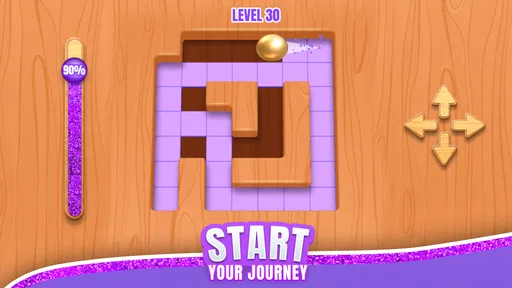
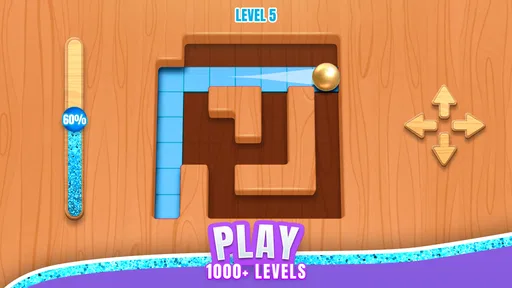
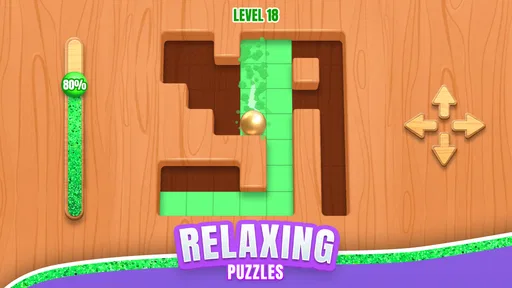
AMAZE! is a casual puzzle game based on guiding a colored ball across a maze-like board. Your objective is to cover every available tile by moving through the level, usually without leaving any space unfinished. The controls are simple and easy to understand, but later stages introduce more complex layouts that require planning, careful movement, and sometimes testing different routes before finding the correct solution.
Is AMAZE! free to download and play?
AMAZE! can generally be downloaded and played for free, allowing users to access its core puzzle content without paying upfront. However, the free version may include advertising, including ads between levels or after completing certain challenges. Depending on the platform and version, optional purchases may also be available to remove advertisements or unlock additional features, so checking the store listing is recommended.
Does AMAZE! require an internet connection?
Many of AMAZE!’s basic puzzles can usually be played without a constant internet connection, which makes the game suitable for short sessions while traveling or when mobile data is unavailable. Nevertheless, an internet connection may be needed for advertisements, analytics, updates, cloud-related features, or purchases. Offline availability can vary by device and app version, so it is worth testing the game after disabling Wi-Fi and mobile data.
Are there many levels in AMAZE!, and does the difficulty increase?
AMAZE! offers a large collection of short puzzle levels designed to become progressively more challenging. Early stages primarily teach the movement system and basic objective, while later puzzles require more deliberate planning and attention to the board layout. The game is easy to start but can become surprisingly demanding, especially when a single incorrect move forces you to restart or rethink the entire route.
Is AMAZE! suitable for children and casual players?
AMAZE! is generally appropriate for casual players and children because its rules are straightforward, the controls are simple, and there is no complicated story or advanced gaming knowledge required. The main concerns are advertisements and any in-app purchase options, particularly when the game is used by younger players. Parents should review the app’s current content rating, privacy information, and device purchase settings before installation.
Play our best games!


